 Eastern Visayas Media Without Borders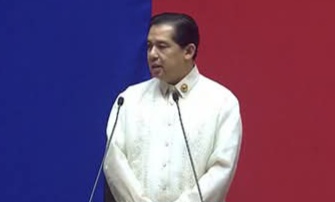
Tacloban City–Leyte’s first district Congressman Ferdinand Martin G. Romualdez has filed a proposed law that aims to reduce cancer deaths among Filipinos through early detention programs.
His proposal is House Bill (HB) No. 7942, of which Tingog Party-list Rep. Jude Acidre is also
a principal author.
The bill is titled, “Strengthening cancer risk screening, profiling and awareness programs through the Department of Health, in partnership with local government units, barangay health workers and other stakeholders, and for other purposes.”
Citing data from the Philippine Statistics Authority (PSA), Romualdez said cancer consistently ranks among the top three leading causes of mortality in the country.
“A major factor contributing to this alarming reality is the late diagnosis of cancer cases, which not only reduces survival rates but also imposes severe financial hardship on affected families. Studies reveal that treatment of late-stage cancer can consume more than 30 percent of a household’s income, often pushing families into financial catastrophe,” Romualdez said.
In contrast, Romualdez said high-income countries report higher cancer incidence but lower mortality, owing to robust early detection and prevention programs.
“Evidence shows that early detection significantly improves survival rates while reducing overall treatment costs, making it both a life-saving and cost-effective public health strategy,” Romualdez said.
For his part, Acidre pointed out that the bill “seeks to institutionalize annual community-based cancer early detection programs through risk profiling, barangay-level screening, and awareness campaigns across municipalities.”
Acidre also proposed to strengthen the role of barangay health workers (BHWs) by providing capacity development and training, enabling them to effectively assist in cancer prevention, screening promotion, health navigation, and patient support.
“By integrating grassroots health workers into systematic cancer risk detection and awareness efforts, the State fulfills its mandate under the Constitution to protect and promote the right to health, while complementing the objectives of Republic Act No. 11215, or the National Integrated Cancer Control Act,” Acidre stressed.
Under the proposed Cancer Risk Screening and Awareness Act, the initial coverage of early detention programs are breast, cervical, colorectal (colon), and prostate cancers.
The Department of Health (DoH), upon recommendation of the National Integrated Cancer Control Council, may expand the list.
The DoH, in coordination with local government units (LGUs), provincial, city, and municipal health offices, barangay health centers, academic institutions, and other concerned agencies, is mandated to establish a comprehensive cancer risk profiling system nationwide.
Subsequently, a municipality- or city-wide cancer risk registry shall be created to record prevalence trends, screening results, and follow-up care. Patient confidentiality shall be strictly observed pursuant to Republic Act No. 10173, otherwise known as the Data Privacy Act of 2012.
The bill provides that the DoH, in coordination with LGUs, municipal or city health centers, BHWs and rural health units, shall conduct regular and periodic barangay-based cancer screening, free of charge or subsidized. Priority shall be granted to the indigent and high-risk population.
Health facilities conducting screening shall establish a referral mechanism to higher-level facilities for confirmatory diagnosis and treatment. Referral shall include linkage to PhilHealth benefits and other financial or logistical support services.
The proposed law also mandates the DoH, in collaboration with LGUs, civil society and professional medical associations to develop and integrate a culturally sensitive health education campaign on cancer risk factors and lifestyle prevention, early signs and symptoms of cancer, and importance of early detection and treatment adherence.
It calls for capacity development among BHWs, including training on cancer prevention and health promotion, screening assistance and navigation, psychosocial support, and referral pathways and linkage to financial assistance programs.
The DoH, in coordination with relevant agencies, shall issue implementing rules and regulations.